




















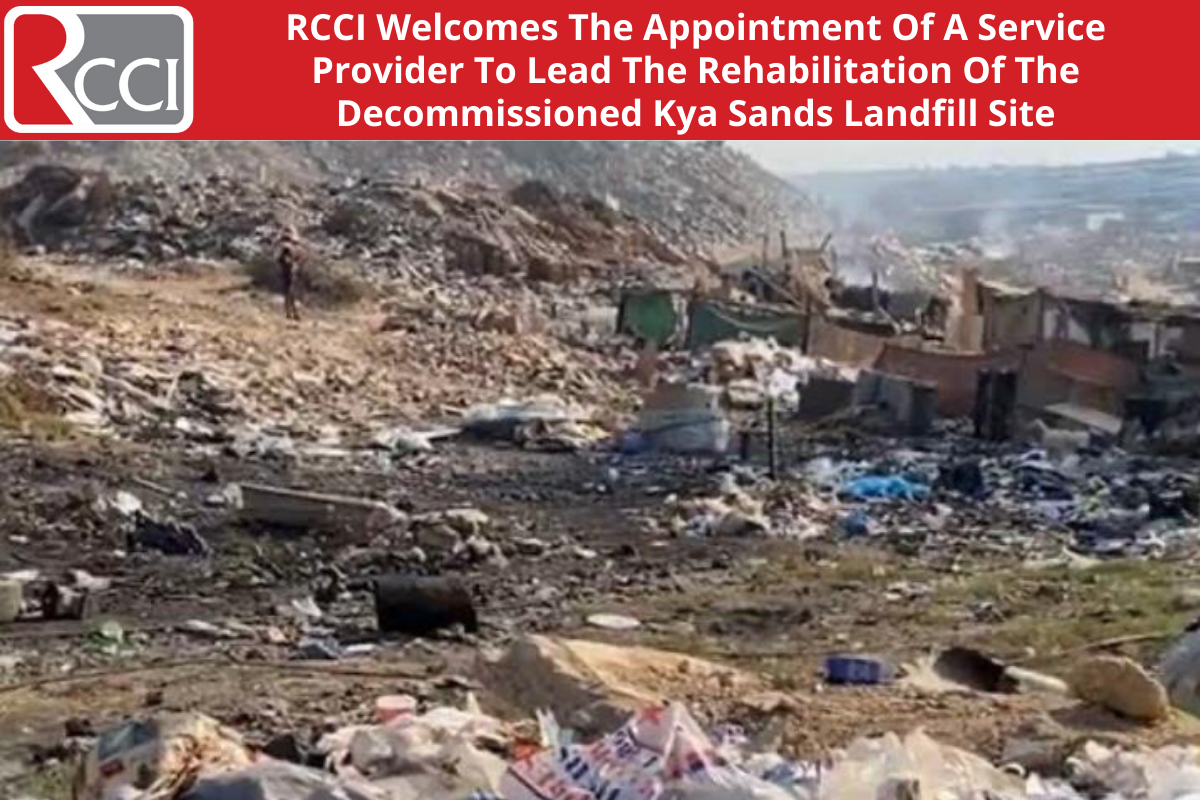
The Randburg Chamber of Commerce and Industry (RCCI) welcomes the City of Johannesburg’s appointment of the much-anticipated service provider to rehabilitate the hazardous Kya Sands landfill site. The site, which was closed in 2010 after reaching full capacity, has since become a hotspot for widespread illegal dumping, impacting the environment, local businesses and nearby communities. According to the City of Johannesburg, the smoke from burning waste has further reduced air quality below 35% in areas such as Fourways, Cedar Lakes and Bloubosrand, affecting an estimated 80 000 residents.
The R150 million project aims to restore environment integrity, improve air quality and safe guard public health. Key interventions will include:
- Clearing and recycling illegally dumped waste
- Developing and implementing a rehabilitation plan
- Installing security measures such as fencing, lighting and a guardhouse
- Restoring the landfill’s boundary wall
- Conducting long-term environmental monitoring of water and air quality
“ This project will restore environmental integrity, improve air quality and create a safer, healthier space for the community. Public consultation and air quality testing are already underway” said Makhosazana Mtshali, director of the waste management and regulation unit.
“The rehabilitation will cover surveying, identification and quantification of illegal dumping, clearing and recycling dumped waste, developing a rehabilitation plan for the closed landfill, and restoring the boundary wall among other measures”, she added.
The local community is expected to take part in consultations, job opportunities in waste clearing and site monitoring and benefiting from improved living conditions such as clean air, reduced dumping and safer surroundings.
Long term benefits include:
- Renewed business confidence in Kya Sands and Bloubosrand
- Cleaner, safer communities with potential job creation
- Improved biodiversity and compliance with national waste management standards
The City of Johannesburg says it aims to ensure long-term environmental compliance, curb illegal dumping and contribute to healthier more sustainable communities.